The Workplace Is Becoming One of the Most Influential Drivers of Organisational Culture
- Home
- The Workplace Is Becoming One of the Most Influential Drivers of Organisational Culture
For years, organisations have invested heavily in culture-building.
Leadership communication. Engagement programmes. Values workshops. Recognition campaigns.
Yet one challenge remains: turning stated values into everyday behaviour.
This is changing how organisations think about culture.
Increasingly, culture is being understood not only as something employees are told, but as something they experience every day.
The Workplace as a Cultural System
Every workplace shapes behaviour.
Every workplace shapes behaviour.
The way teams interact, how visible leaders are, the accessibility of shared spaces and the ease of collaboration all influence how work happens.
These may appear to be design decisions, but they also communicate organisational priorities.
A workplace designed for spontaneous interaction creates different behaviours from one built around isolation. Spaces for knowledge sharing, focused work and informal conversations reinforce different ways of working.
Over time, repeated experiences become behavioural patterns.
And behavioural patterns shape culture.
Research has also found associations between office design features and employees' perceptions of organisational culture, particularly around communication, collaboration and relationships.
Beyond Aesthetics: Designing Behaviour
The evolving role of the workplace is changing how organisations approach design.
The question is no longer simply:
How should this workplace look?
It is increasingly:
What behaviours should this workplace enable?
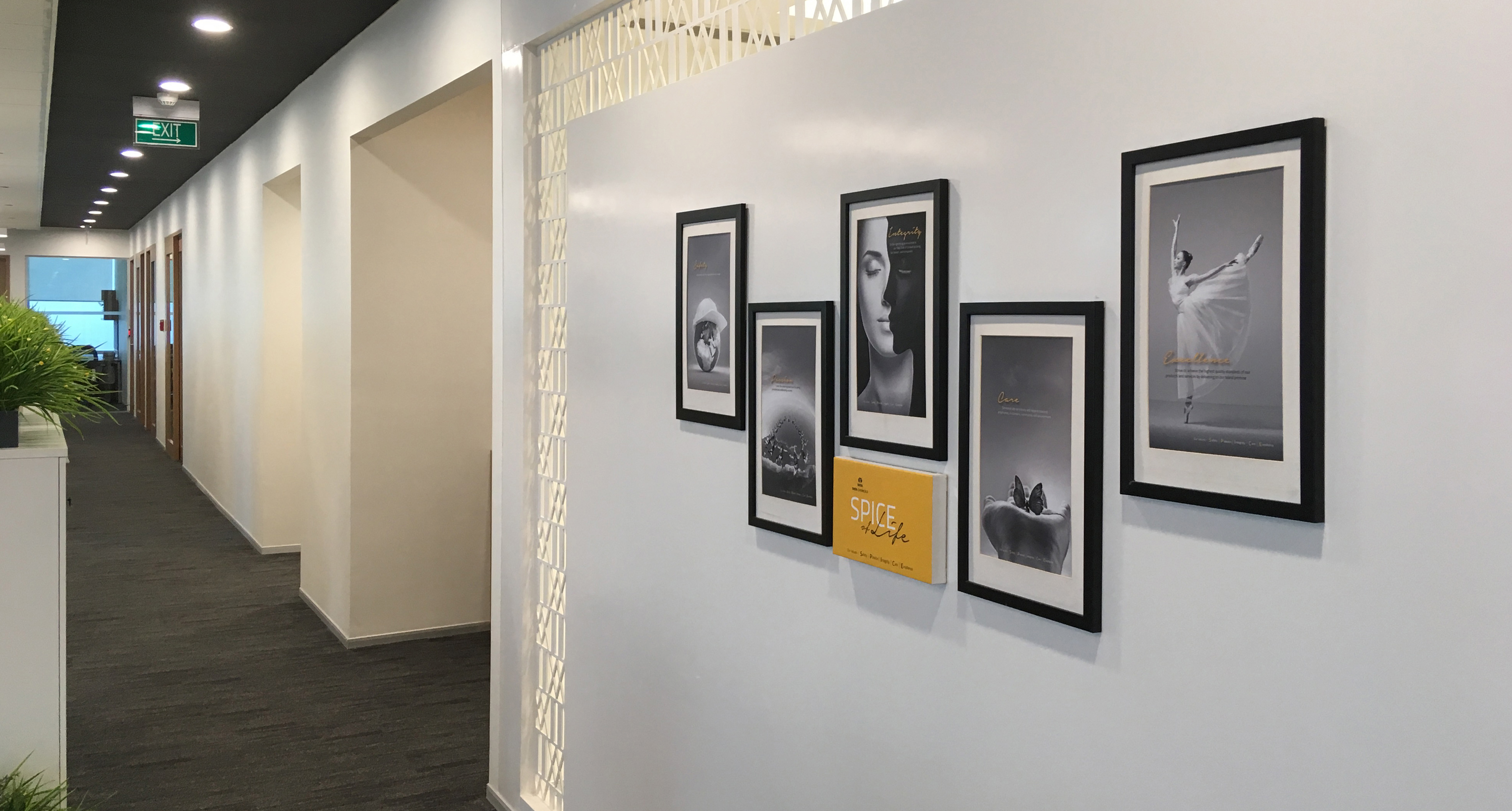
This is also redefining workplace branding. Storytelling can create connection. Recognition can make contributions visible. Wayfinding can reduce friction. Shared spaces can encourage interaction.
Together, these elements shape how employees experience the organisation.
Rather than simply communicating values, the workplace can help employees experience them.
Experience Shapes Culture
Unlike a campaign or leadership presentation, the workplace communicates every day.
Employees experience how easily they collaborate, where conversations happen, how information flows, and how accessible leadership feels.
These signals may be subtle, but their influence is cumulative.
That is why workplace design is becoming more than an architectural or branding exercise.
It is becoming a strategic business tool.
Looking Ahead
Workplace strategy and culture strategy are becoming increasingly connected.
The most effective workplaces will not simply reflect an organisation's identity.
They will reinforce the behaviours the organisation needs to succeed.
Because culture is not built by what employees hear occasionally.
It is built by what they experience every day.
And when the workplace is designed intentionally, it can become one of the most scalable tools for turning culture from a statement into a shared way of working.